Walking the Full Wall
The circuit is 5.74 km with a real climb onto the ridge. What it involves, how long to allow, and why walking a third of it is a perfectly good day.
The circuit is 5.74 kilometres, enclosing roughly 130 hectares, and it is one of the better urban walks in Korea — partly because it is not really an urban walk. It climbs.
What it actually involves
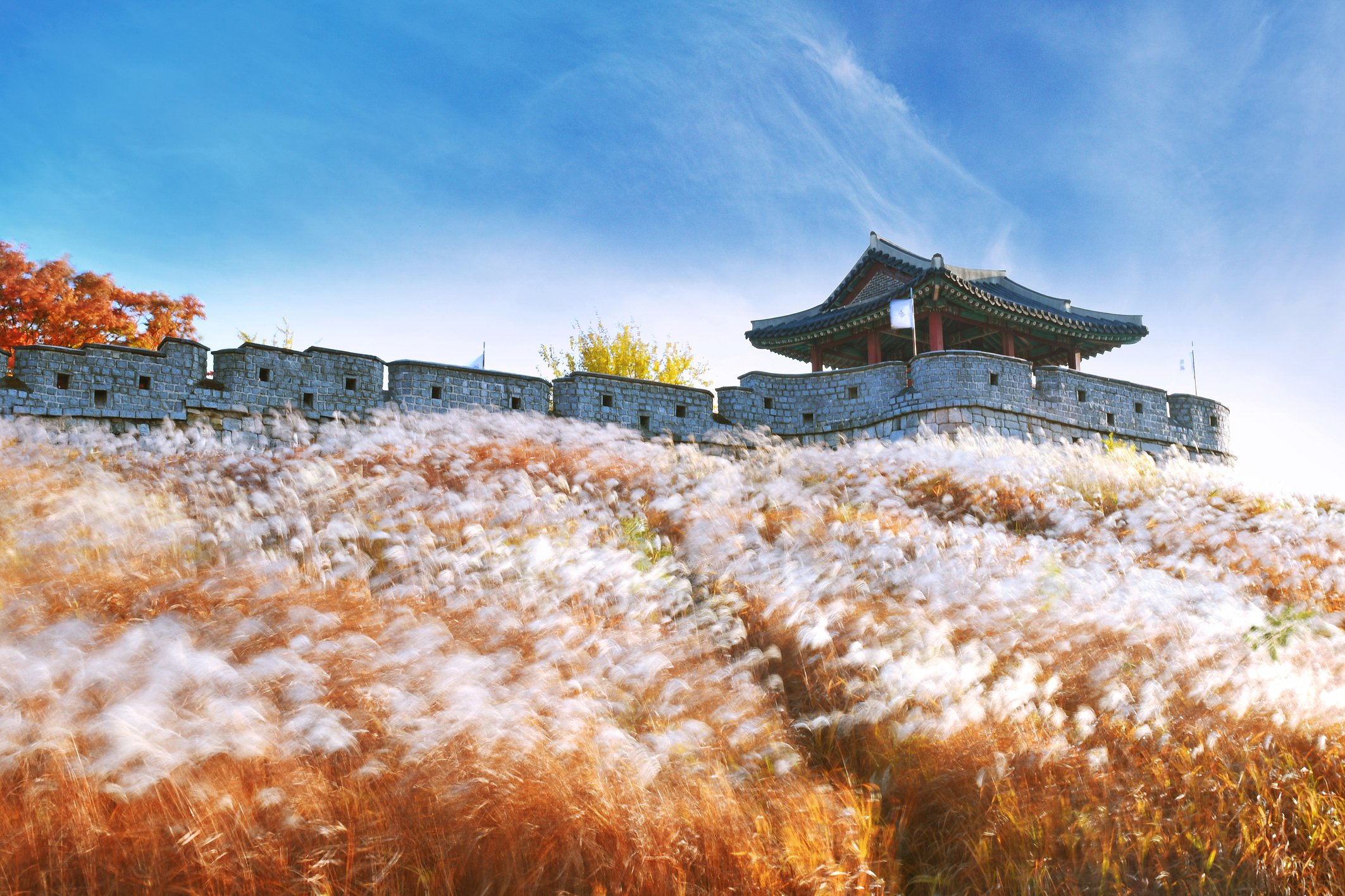
The wall follows the terrain, not a plan. That is the single most important thing to know before you set out, and it is also what makes Hwaseong architecturally interesting: an 18th-century fortress laid out to fit a landscape rather than to look tidy on a drawing.
In practice it means the loop rises onto a ridge and comes back down, and the ridge section is a genuine climb with steps rather than a stroll. It is not mountaineering and it is not accessible either.
The rest of the circuit runs through the middle of a living city. You are on a wall with traffic and shopfronts on one side — which is the other unusual thing about Hwaseong. It never became a museum; the town simply carried on inside it.
How long to allow
A couple of unhurried hours for the full loop with stops for the gates and the views. Faster if you march, considerably longer if you photograph everything.
Add time for Hwaseong Haenggung, the palace inside the walls, which is the other half of the site and is easy to walk past. It deserves its own hour.
You do not have to do all of it
This is the part most guides skip, and it is the useful part.
There is no penalty for walking a section. The wall passes through the town at multiple points; you can join it, walk the stretch you want, and step off into Suwon for lunch. Plenty of visitors walk the ridge portion — the best views and the most dramatic wall — and leave the flat urban section undone.
Do a section rather than the loop if: you are short on time, the weather is punishing, you are travelling with small children, or steps are a problem. The fortress does not reward completionism more than it rewards attention.
When to walk it
Early or late in summer — Korean summers are hot and humid and the ridge is exposed. Autumn is the reliably pleasant season and the one most visitors are aiming for anyway.
After dark is a different experience entirely. The walls and gates are lit and the crowds are gone — there is a night tour built around exactly that, and it is not simply the daytime walk in the dark.
Walking it with a guide
Optional, and the honest case for it is not the route — the wall is impossible to get lost on. It is that the structures along it are specific solutions to specific problems, and none of that is self-evident: the floodgate over the stream, the command posts, why the gates sit where they sit.
If that is the version you want, the fortress-focused tour is the one that stays on the walls rather than moving on to a folk village at lunchtime — the comparison is here.
Going alone? The independent route: Line 1, about an hour, and roughly a dollar to get in.
The wall is free — the day out is not
Guided Ways to See Suwon
If you would rather have the walk interpreted and the transport handled, these are the bookable options.
Book the Tour Where the Fortress Is the Point
Most Suwon day trips treat Hwaseong as one stop among four. This one does not — it is the fortress and Haenggung Palace with a guide, rated 4.97/5 by 137 verified guests, from about $52. Free cancellation.
Check Availability & Book